Botanical name Commersonia fraseri
A common name Brush Kurrajong
Seedling
Most plants arise from suckers, I will post a seedling photo when I see one.Young plant
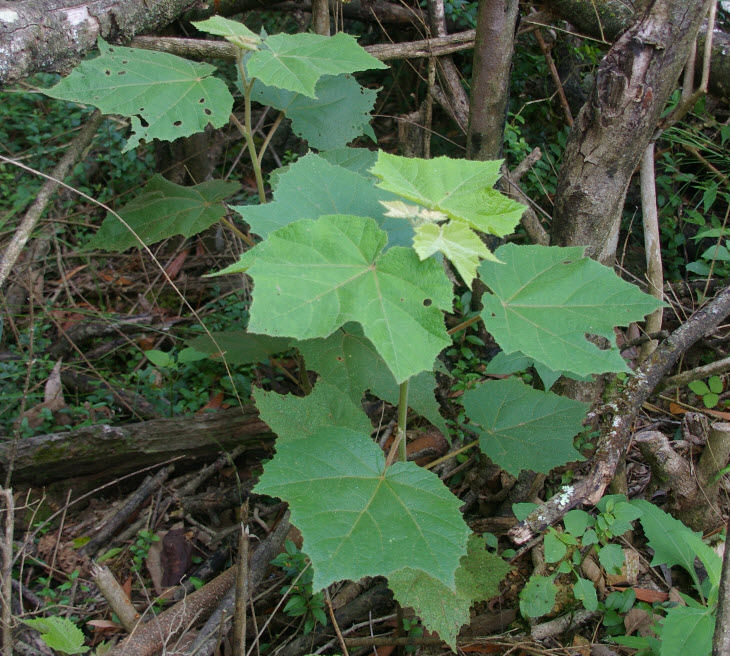 Again, most arise from suckers, as
these are. Commersonia fraseri tends to be frost tender, however
most plants grow back.
Again, most arise from suckers, as
these are. Commersonia fraseri tends to be frost tender, however
most plants grow back.Really severe frosts will kill mature trunks, with regrowth happening next spring. You can see evidence of frost damage in the third photo, with all the leaves visible having sprouted this Spring.
Brush Kurrajong is one of the really fast growing short lived trees that can pop up in disturbed areas here.
It grows much faster than Privett and can provide deep shade very fast, most useful in reducing rampant Privett regrowth. Most of the very small seedlings to the right and above this paragraph are small leaved Privett.
I find that Small Leaf Privett seedlings, these ones, will firstly cease to grow as the light levels drop, above about 80% shade, as you pass that, at maybe 90% and above they dissapear.
The higher percentages are reached either under a well established privett canopy or under healthy rainforest, with only Eucalyptus canopy the light levels are too high and they continue to grow.
This only applies to Small Leaf Privett, Large Leaf Privett will still grow in almost 100% shade.
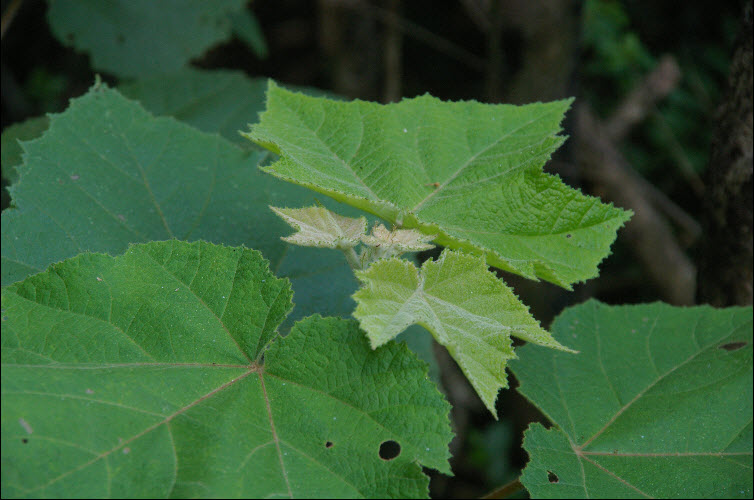
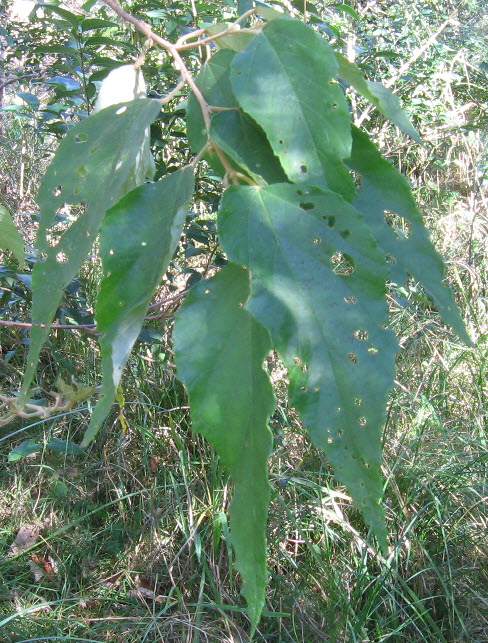
Our Swamp Wallabies only seem to go for the most tender new shoots, those still obviously white with hairs, various bugs eat the mature green leaves of Brush Kurrajongs of any age. You can see the feasting has already started here.
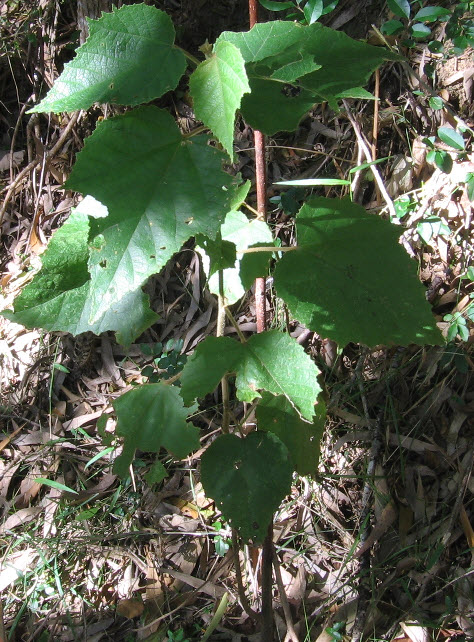
This plant is showing frost damage from last Winter, the brownish stem to the right was last years growth, it used to be bigger, and it is now. Most setbacks like this are only temporary, other plants grow to help create more protection from frost or as in past 3 years, the Winters are mostly frost free, the last one had a little but not that much, not penetrating at all. Only those plants out in the open were affected.
Again, you can see various nibblings have taken place.
Juvenile
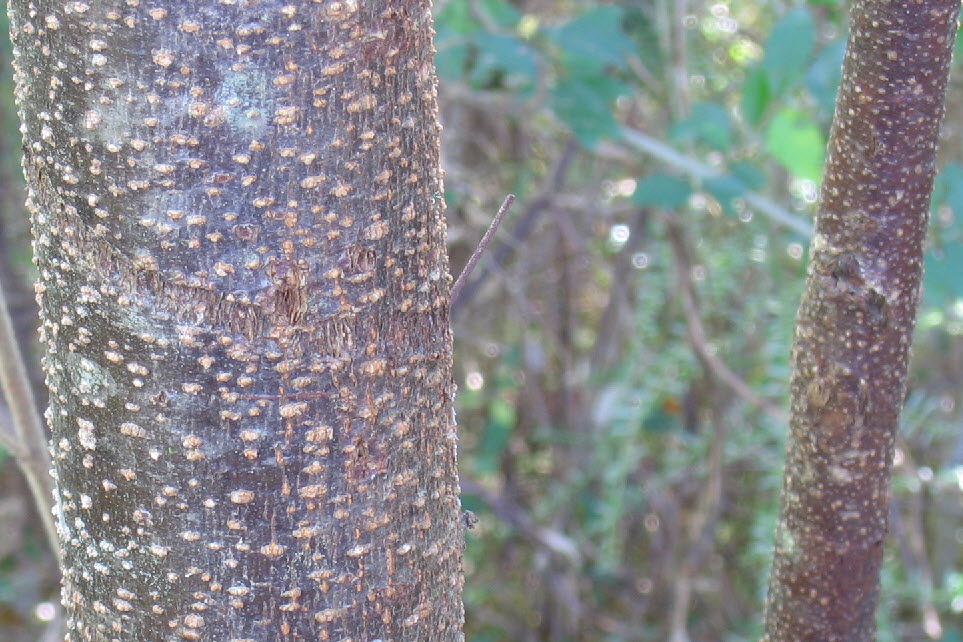
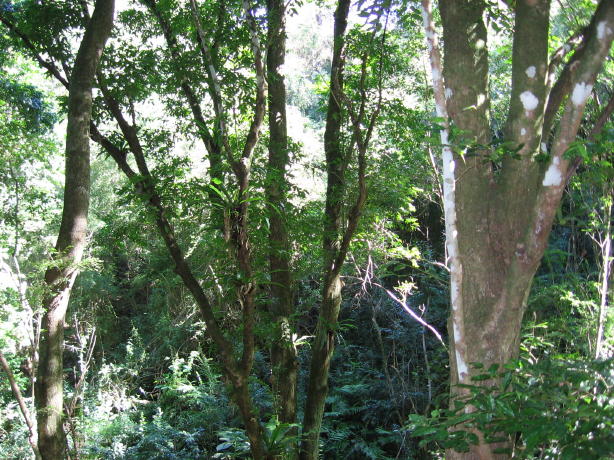
Commersonia fraseri undergoes a few transformations in both leaf and bark as it grows. The trunk on the left below belongs to a sapling perhaps 5 or 6 metres tall, the one on the right, a sucker, is maybe 2 metres tall. They most frequently spread by root suckers so you can get sizeable groves of Commersonia fraseri.